
1. Technical Excellence & Enterprise Infrastructure: Navigating Global Powder Standards
In modern industrial manufacturing and global B2B procurement, sourcing raw material powders requires strict adherence to international quality management systems, precise particle science, and complete supply chain transparency. As a leading manufacturer and exporter headquartered in China with multi-regional compliance nodes—including Health Canada Site Licensing, US FDA Facility Registration, and ISO 22000 / GMP operational standards—our enterprise bridges the gap between high-capacity chemical synthesis, bio-fermentation, and stringent global regulatory expectations.
Managing over 2,400 commercialized active ingredients, mineral pigments, synthetic sweeteners, and functional peptides, our supply architecture relies on validated quality assurance protocols. Every raw material production batch undergoes comprehensive testing using High-Performance Liquid Chromatography (HPLC), Inductively Coupled Plasma Mass Spectrometry (ICP-MS), and Gas Chromatography-Mass Spectrometry (GC-MS) to guarantee chemical identity, exact potency, residual solvent elimination, and heavy metal control under strict regulatory thresholds.
Integrated Quality Assurance Infrastructure
Our multi-national quality matrix incorporates dual-market regulatory filings, full batch traceability, lot-retained sample storage for full shelf-life durations, and third-party ISO 17025 laboratory verification. This guarantees seamless import clearance across North America, the European Union, the GCC region, and Asia-Pacific markets.
HPLC Assay Verification
Quantitative measurement of active compounds ensuring precise purity margins from 98.0% to 99.9% across bulk nutritional and synthetic lots.
ICP-MS Heavy Metal Profiling
Trace element quantification capable of detecting Lead (Pb), Arsenic (As), Cadmium (Cd), and Mercury (Hg) at sub-parts-per-million (ppm) precision.
Controlled Particle Rheology
Laser diffraction particle sizing (D10, D50, D90) tailored for tableting compression, rapid water dissolution, or high-temperature ceramic sintering.
2. Comparative Technical Specifications of Key Industrial & Ingredient Powders
Understanding the micro-structural differences and physical performance characteristics of raw materials is essential for chemical engineers, cosmetic formulators, and food scientists. The matrix below outlines technical parameters for selected core export lines:
| Ingredient / Material Name | CAS / Standard | Purity & Active Grade | Bulk Density & Flowability | Primary Industrial Application |
|---|---|---|---|---|
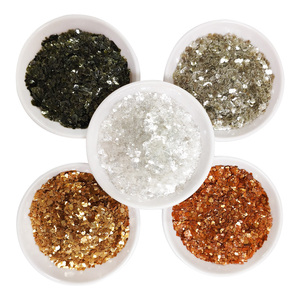
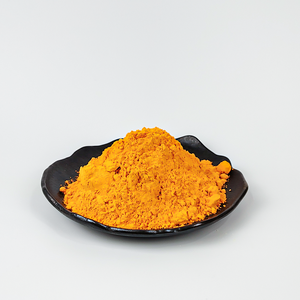
| Sericite Mica Powder | CAS 12001-26-2 | >99.5% Natural Muscovite | 0.25 - 0.35 g/cm³ (High Slip) | Cosmetic Foundation, Heat Shield Coatings (1200°C) |
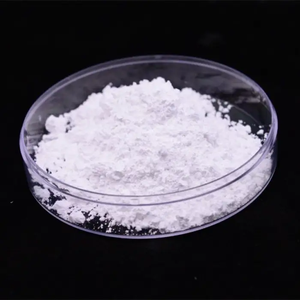
| Nano Zirconia (ZrO2) | CAS 1314-23-4 | 99.0% Min (Stabilized) | 0.80 - 1.20 g/cm³ (Sub-micron) | Structural Ceramics, Dental Implants, Thermal Barriers |
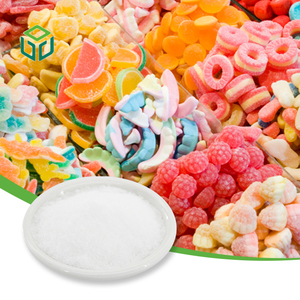
| Bulk Erythritol | CAS 149-32-6 | 99.0% - 100.5% HPLC | 0.65 - 0.75 g/cm³ (Granular) | Zero-Calorie Food & Beverage Formulation |
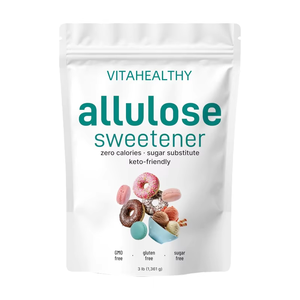
| Crystalline Allulose | CAS 551-68-8 | ≥99.0% D-Psicose | 0.60 - 0.70 g/cm³ (Crystalline) | Keto Bakery, Non-Glycemic Sugar Replacement |
| Water-Soluble CoQ10 | CAS 303-98-0 | 10% & 20% CWS Powder | 0.45 - 0.55 g/cm³ (Nano-emulsion) | Functional Beverages, Effervescent Tablets, Nutraceuticals |
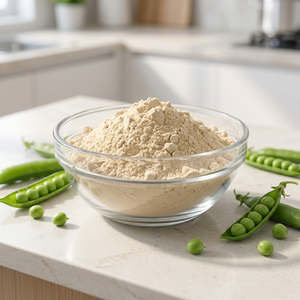
| Hydrolyzed Pea Peptide | Natural Extract | ≥80% Protein (<1000 Da) | 0.35 - 0.45 g/cm³ (Instantized) | Sports Nutrition, Vegan Clinical Protein Enhancers |
3. B2B Sourcing Analysis & Future Market Procurement Trends (2025–2030)
The global trade of raw ingredient powders is undergoing a paradigm shift driven by stricter global compliance frameworks, advanced particle modification technologies, and a growing consumer demand for clean-label, bio-based products. Global procurement managers must align their supply chains with these key trends to mitigate regulatory exposure and secure long-term price-to-performance advantages.
Trend 1: Bio-Fermentation and Clean-Label Sweetener Dynamics
Synthetic high-intensity sweeteners are increasingly being complemented—and in some markets superseded—by rare sugars like D-Allulose and polyols like Erythritol derived via enzymatic biotransformation. The challenge for commercial buyers lies in securing suppliers with stable raw starch feedstock supplies and advanced crystallization control. Enzymatic processing yields higher purity profiles with lower trace impurities, satisfying EU food safety mandates and US FDA GRAS notifications. Furthermore, blending technologies that combine high-intensity sweeteners like Sucralose with bulky polyols enable exact sucrose-like taste curves without glycemic impact.
Trend 2: Micro-Encapsulation and Nano-Dispersion Technologies
Lipophilic bioactive compounds such as Coenzyme Q10 (CAS 303-98-0) historically faced severe absorption limitations in beverage and dietary supplement formulations due to poor water solubility. Modern manufacturing techniques leverage micro-encapsulation, spray-drying, and nano-emulsification carriers (such as modified starches or plant-derived phospholipids) to create Cold-Water-Soluble (CWS) powder variants. These micro-encapsulated formats prevent oxidation, mask unpleasant organoleptic profiles, and significantly enhance human bio-accessibility, transforming how functional beverage brands develop ready-to-mix powders.
Trend 3: High-Performance Ceramic Nanomaterials and Thermal Pigments
In high-tech industrial manufacturing, demanding thermal stability requirements drive adoption of high-purity inorganic powders. Nano-scale Zirconium Dioxide (ZrO2) with strictly controlled particle size distributions (<50nm) permits low-temperature sintering, yielding structural ceramics with exceptional fracture toughness, dielectric strength, and wear resistance. Simultaneously, in the cosmetic and coatings sectors, high-purity Sericite Mica flake powders capable of enduring temperatures up to 1200°C offer non-reactive slip, chemical resistance, and non-toxic metallic iridescence without heavy metal contamination.
Trend 4: Regulatory Harmonization and Supply Chain Traceability
Cross-border B2B trade now demands comprehensive regulatory documentation packs prior to container loading. Buyers require complete Certificate of Analysis (COA) history, Allergen Statements, Non-GMO verifications, BSE/TSE-Free Declarations, and precise Customs Tariff (HS Code) classifications. China’s advanced bulk manufacturing hubs have integrated full digital lot tracking, allowing international buyers to inspect raw material origins, synthesis batch records, and lab testing certificates in real time.
4. Complete Quality Assurance & Export Verification Protocols
To eliminate cross-contamination and guarantee batch-to-batch consistency, our manufacturing infrastructure operates under stringent operational zoning. Dedicated production lines separate botanical allergen extraction, synthetic sweetener crystallization, and mineral micronization. The following flowchart outlines our multi-stage Quality Gate system from raw material intake to final export delivery:
Stage 01: Intake Quarantine
Raw materials locked in air-lock quarantine. Sampling conducted via sterile probes under HEPA Class 100 laminar flow hoods for identity and microbiological baseline checks.
Stage 02: Process Control
In-line laser diffraction monitors particle size during jet milling. Automated sieving and magnetic separation eliminate metallic foreign particles down to 0.1mm.
Stage 03: Final Release
Finished lot testing for HPLC assay, loss on drying, bulk density, heavy metals, and micro-pathogens. Certificate of Analysis generated and validated by QA Directors.
5. Enterprise Advantages & Why Global Brands Partner With Us
Building a resilient global supply chain requires more than just low unit costs; it demands operational reliability, scalable production capacity, and legal accountability across international jurisdictions. Referencing decades of manufacturing heritage and international logistics infrastructure, our OEM/ODM custom supply platform offers distinct operational advantages:
- Scalable Minimum Order Quantities (MOQs): Commercial trial batches starting from 500 kg for specialty powder blends or 1,000 units for custom formulations, scaling seamlessly up to multi-container high-volume shipments.
- Rapid Lead-Time Execution: Standard catalog ingredients ship within 5 to 7 business days from bonded warehouses; custom micronization, spray-drying, or OEM private label packaging completes within 6 to 8 weeks.
- In-House Regulatory Support: Dedicated regulatory affairs teams prepare Health Canada NPN submissions, US FDA Supplement Facts panel copy, EU Food Supplement Notifications, and GCC/UAE registration dossiers.
- Segregated Production Infrastructure: Allergen-free, non-GMO, Halal-certified, Kosher-certified, and vegan production lines prevent cross-contact and support specialized dietary claims.
- Global Logistics Flexibility: Complete capability across FOB, CIF, DDP, and DAP terms with export documentation including Free Sale Certificates, Certificates of Origin, and Phytosanitary Certificates.