Explore our top-tier bulk collagen peptides and functional gummy products engineered for global retail brand scaling and private label distribution.
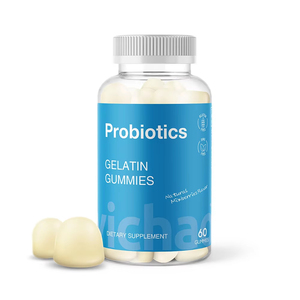
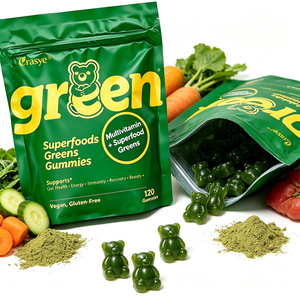
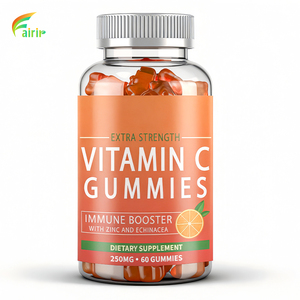
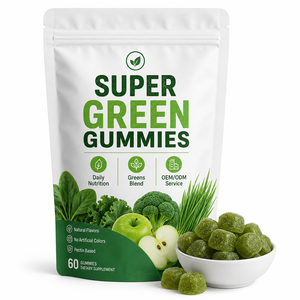
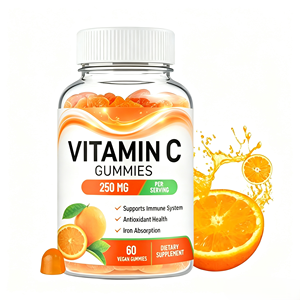
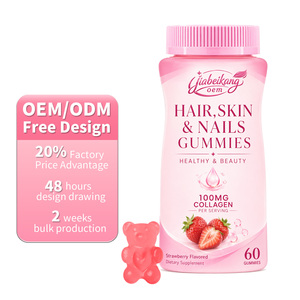
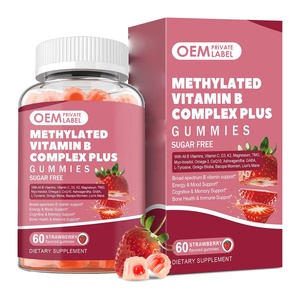
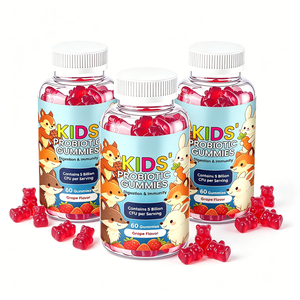
An authoritative analysis of enzymatic hydrolysis, molecular weight optimization, raw material sourcing, and supply chain transparency for global enterprise buyers.
As the international nutricosmetic and functional food markets expand, B2B procurement managers, contract manufacturing partners, and brand owners face increasing pressure to secure high-purity, bioavailable hydrolyzed collagen peptides (Type I & III). Sourcing from accredited Chinese manufacturers backed by North American compliance management provides an unmatched strategic advantage—combining high-yield bio-enzymatic extraction with rigorous GMP, Health Canada, and US FDA oversight.
Native collagen molecules possess a complex triple-helix structure with a high molecular weight (~300,000 Daltons), rendering them insolubilized and difficult for human gut absorption. Advanced Chinese manufacturing facilities employ multi-stage enzymatic cleavage—utilizing targeted endopeptidases and exopeptidases—to cleave peptide bonds without damaging functional amino acid residues (Glycine, Proline, Hydroxyproline). This yields bioactive collagen hydrolysate with controlled molecular weights ranging between 1,000 Da and 3,000 Da, accelerating intestinal peptide transporter (PepT1) absorption by up to 95%.
Commercial B2B buyers must navigate specific raw material origins to match market demographic demands. Bovine collagen peptides derived from grass-fed, pasture-raised hides deliver rich Type I & Type III matrices ideal for joint and skin elasticity. Marine collagen peptides derived from deep-sea fish scales and skins offer superior low-molecular micro-tripeptides (Gly-Pro-Hyp) preferred for premium nutricosmetic anti-aging formulations. Leading China exporters implement closed-loop raw material tracking systems that verify veterinary health certificates and non-GMO origin prior to processing.
Comparative analytical metrics for B2B procurement evaluation across primary raw material sources.
| Analytical Parameter | Hydrolyzed Bovine Collagen | Hydrolyzed Marine Collagen | Porcine Collagen Peptides | Testing Method / Compliance |
|---|---|---|---|---|
| Protein Content (Dry Basis) | ≥ 90.0% | ≥ 93.0% | ≥ 90.0% | Kjeldahl Method (N x 5.55) |
| Average Molecular Weight | 2,000 – 3,000 Daltons | 1,000 – 2,000 Daltons | 2,000 – 4,000 Daltons | HPLC / Gel Permeation Chromatography |
| Hydroxyproline Content | ≥ 10.5% | ≥ 8.5% | ≥ 11.0% | Colorimetric Spectrophotometry |
| Heavy Metals (Total as Pb) | < 10 ppm (Pb < 0.5 ppm) | < 5 ppm (As < 0.5 ppm) | < 10 ppm | ICP-MS Spectrometry |
| Microbiological Count | < 1,000 CFU/g | < 500 CFU/g | < 1,000 CFU/g | USP / EP / GB Standard Protocols |
| Organoleptic Profile | Neutral taste, off-white powder | Odorless, highly soluble | Neutral flavor profile | Sensory Panel Evaluation |
| Primary Target Application | Sports Nutrition, Joint Health | Nutricosmetics, Premium Beauty | Functional Food, Confectionery | Application Engineering |
Key operational and market shifts driving international procurement decisions for nutraceutical brands.
The market is rapidly evolving beyond standard hydrolyzed powders toward customized peptide sequences. Specifically, small-molecule Gly-Pro-Hyp (Glycine-Proline-Hydroxyproline) tripeptides bypass standard digestive breakdown and directly enter the bloodstream to stimulate dermal fibroblast proliferation and articular cartilage repair. B2B buyers are demanding suppliers capable of delivering guaranteed tripeptide mass fraction concentrations via precise enzyme cutoffs.
Global retailers (especially across Europe and North America) are imposing strict environmental, social, and governance (ESG) metrics on contract manufacturers. Suppliers in China are updating facilities with zero-water waste filtration, solar-assisted drying towers, and sustainably harvested marine byproducts certified by Friend of the Sea and MSC. Procurement managers must demand documented lifecycle assessment (LCA) data during vendor audits.
Traditional collagen powders often suffer from clumping or high viscosity in cold liquids. Modern procurement trends emphasize agglomerated, instantized powders with controlled bulk density (0.30–0.45 g/mL) that dissolve completely in cold beverages within 15 seconds. Furthermore, brands are shifting toward turnkey multi-format manufacturing—combining collagen with postbiotics and vitamins inside chewable pectin gummies, liquid shots, and effervescent tablets.
Maximizing biological efficacy and commercial value through modern ingredient synergy and dosage form innovation.
Collagen synthesis within human tissue requires enzymatic hydroxylation of lysine and proline residues—a reaction mediated by prolyl hydroxylase that strictly depends on L-Ascorbic Acid (Vitamin C). Forward-thinking CDMO formulations blend low-molecular collagen peptides with buffered Vitamin C (Sodium Ascorbate) and zinc gluconate to deliver demonstrable clinical outcomes for dermal thickness and joint tissue repair.
Marine collagen hydrolysate often retains faint fishy odors or metallic off-tastes due to residual lipid oxidation. Advanced China export facilities utilize spray-drying micro-encapsulation techniques with natural cyclodextrin matrices. This masks organoleptic off-notes completely without diminishing active peptide concentrations, enabling seamless incorporation into RTD (Ready-To-Drink) beverages and functional confectionery gummies.
Integrating Canadian scientific oversight and regulatory expertise with large-scale, cost-efficient manufacturing facilities.
Our operation bridges Canadian quality standards (Health Canada Site Licence holding) with global ISO 22000 and US FDA registered processing sites. This guarantees seamless custom clearance into North America, Europe, and the GCC region.
Every commercial production batch undergoes heavy metal testing (ICP-MS), molecular distribution profiling (HPLC), peptide assay, and pathogen verification. Third-party independent COAs accompany every single shipment.
We accommodate emerging DTC brands starting at pilot MOQs of 1,000 units while holding multi-ton capacity for enterprise buyers. Standard private label lead times ship within 6–8 weeks with full transparency.
Our in-house regulatory affairs team prepares complete NPN submissions for Health Canada, FDA Supplement Facts compliance, EU food supplement notifications, Free Sale Certificates, and Halal/Kosher documentation.
From raw material qualification to global port delivery—a systematic approach to zero-defect manufacturing.
We review your active target requirements, molecular weight preferences, taste profiles, and regional claim boundaries.
Enzymatically hydrolyzed raw stocks undergo identity, heavy metal, and microbiological testing upon facility entry.
Small-scale pilot production verifies blend uniformity, encapsulation speed, or gummy gelling characteristics.
Full-scale manufacturing in ISO/GMP cleanroom environments with continuous in-line quality sampling.
Final lab clearance, COA documentation generation, and temperature-monitored sea/air export shipping.
Technical, regulatory, and commercial answers for enterprise collagen peptide buyers.
Bovine collagen is primarily composed of Type I and Type III collagen, rich in Proline and Glycine, making it exceptionally effective for sports recovery, bone density, and overall muscle tendon structural integrity. Marine collagen consists predominantly of Type I collagen with a smaller molecular weight distribution (typically 1,000 to 2,000 Daltons), providing superior bioavailability for dermal hydration and anti-aging nutricosmetic formulations. Marine collagen is also ideal for Pescatarian-labeled product lines.
Heavy metals represent a critical hazard in animal-derived proteins. Our manufacturing network utilizes multi-stage ion-exchange resin filtration and activated carbon treatment during liquid extraction. Every batch is tested using Inductively Coupled Plasma Mass Spectrometry (ICP-MS) down to parts-per-billion (ppb) sensitivity. We enforce strict limits: Lead (Pb) < 0.5 ppm, Arsenic (As) < 0.5 ppm, Mercury (Hg) < 0.05 ppm, meeting USP, EP, and California Proposition 65 standards.
For raw bulk hydrolyzed collagen powder shipments, our standard MOQ starts at 500 kg. For custom private-label packaged goods—such as bottled powders, stick packs, or functional gummies—our MOQs start at 1,000 units for stock formulations and 5,000 units for fully custom R&D projects. Pilot testing batches for stability validation are available upon request.
Yes. Our regulatory specialists prepare complete technical dossiers including Master Batch Records, Certificates of Analysis (COA), Stability Study Reports (Real-time and Accelerated), Free Sale Certificates (FSC), Certificate of Origin (COO), and BSE/TSE-Free statements required by customs agencies worldwide.
When stored in original unopened double PE-lined aluminum foil bags or fiber drums under cool, dry conditions (temperature < 25°C, relative humidity < 60%), hydrolyzed collagen peptides maintain a verified shelf life of 36 months. Accelerated stability testing confirms minimal peptide degradation or organoleptic shift under these parameters.
Ultra-low molecular weight peptides (<1,000 Daltons) exhibit enhanced hygroscopicity (moisture absorption). While they deliver vastly superior biological absorption rates, they require specialized climate-controlled blending environments (RH < 40%) and high-barrier packaging (e.g., nitrogen-flushed foil sachets or desiccated caps) to prevent clumping during storage.
Empower your retail brand with clinically backed, low-molecular hydrolyzed collagen peptides manufactured under strict Canadian & US FDA compliance.
