🇨🇦 Canadian Headquarters · GMP Manufacturing Network Across 5 Countries +1 (437) 595-0172  |  [email protected]
0%

Choosing the right partner for Private Label Supplement Manufacturing is more than comparing prices or browsing attractive product catalogs. A manufacturer may promise fast delivery, low minimum order quantities, and custom formulas. Those promises need evidence.

Dr. Daniel Fabricant, a respected supplement quality expert, captures the central issue: “Quality cannot be tested into a product; it must be built into the process.” That principle should guide every supplier conversation. Ask about current Good Manufacturing Practice compliance, raw material testing, allergen controls, stability studies, and batch traceability. Request recent certificates of analysis, not generic templates. Visit the facility when possible. Look closely at how ingredients are stored, labeled, and released.

Small details matter.

A reliable manufacturer should explain its quality system without hiding behind technical language. It should also clarify ownership of formulas, packaging responsibilities, lead times, and procedures for handling complaints or recalls. A polished website does not prove manufacturing strength. Neither does a long client list. This is where many new brands become overconfident, including experienced buyers who focus too heavily on unit cost.

The best choice may not be the cheapest factory. It should be the partner that protects product quality, communicates honestly, and supports compliant labeling. This guide explores the questions, documents, and practical checks that can help you evaluate manufacturers with greater confidence. There may still be uncertainty. That is normal. Careful verification reduces it.
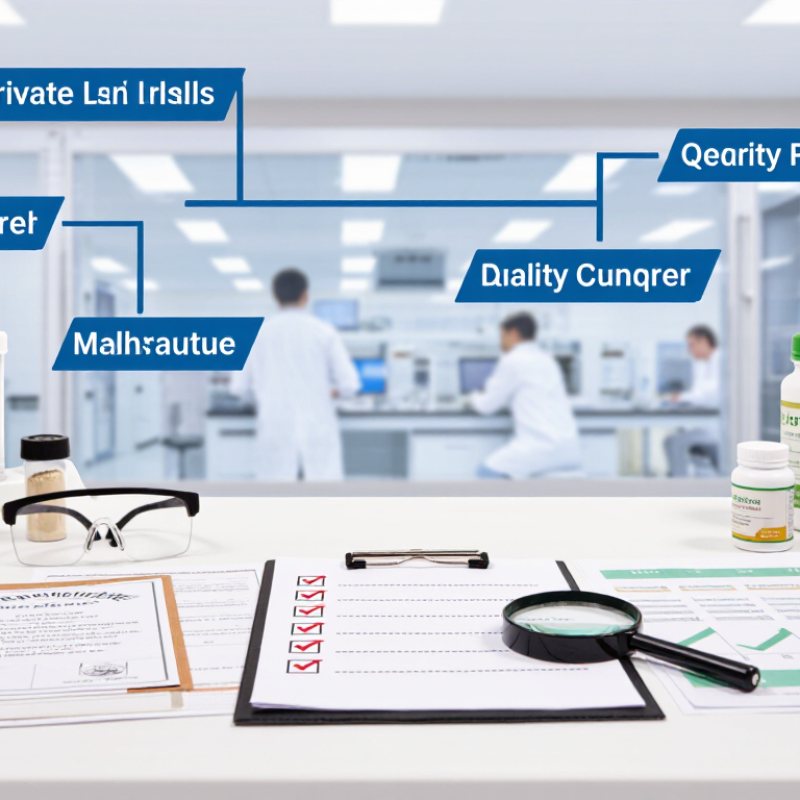
How to Choose a Private Label Supplement Manufacturer?

Define Your Supplement Product and Private Label Requirements

Choosing a private label supplement manufacturer starts before you request a quote. Define the product you actually want to sell. Write down the serving size, dosage form, flavor, ingredient list, and target customer. Decide whether you need capsules, powder, gummies, or liquid drops. A clear product brief prevents costly misunderstandings.

Specify your private label requirements in practical detail. Include bottle size, label dimensions, packaging material, color preferences, minimum order quantity, and target launch date. State your intended sales market, because ingredient permissions and claim rules vary by country. Avoid promising dramatic health results. A compliant, honest message builds stronger customer trust.

Ask manufacturers how they verify quality, not only what they produce. Request current certificates of analysis, finished-product testing, allergen controls, batch records, and stability data. Confirm their quality system and production standards through documented evidence. Check whether they can support formula changes, sample approval, and reliable restocking. A first formula is rarely perfect. I would leave room for improvement after reviewing taste, texture, and user feedback. One detail is often missed: packaging must protect the product during shipping and storage. A professional manufacturer should explain those risks clearly, without hiding fees or giving unrealistic timelines.

Assess Manufacturer Quality, Certifications, and Regulatory Compliance

Choosing a private label supplement manufacturer requires more than comparing prices. Quality begins with a documented quality management system and trained production staff. Ask whether the facility follows current Good Manufacturing Practices and which certification body performed its audit. Check the certificate’s scope, expiry date, manufacturing site, and covered product categories. A logo on a website proves very little. Verify it independently.

Request recent batch records, certificates of analysis, and testing methods before signing a contract. Reliable facilities test raw materials for identity, strength, and contamination. Finished products may also need checks for microbes, heavy metals, allergens, and stability. Confirm that laboratories use validated methods and maintain proper accreditation. Traceability matters too. Each lot should connect ingredients, operators, equipment, test results, and shipment records. Ask how complaints, deviations, and recalls are managed. Their answers reveal operational maturity.

Regulatory compliance depends on the destination market, product claims, ingredients, and labeling. A capable manufacturer should review these details, not simply print your artwork. Confirm that formulas avoid restricted ingredients and that required records are retained. I would also arrange a virtual or on-site audit when practical. Documents can look perfect while routines remain weak. No manufacturer is flawless. The important question is whether problems are reported, investigated, corrected, and prevented from returning. Pricing still matters, but weak verification can create expensive delays and damaged consumer trust.

Compare Formulation, Ingredient Sourcing, and Production Capabilities

Choosing a private label supplement manufacturer starts with the formula, not the sales brochure. Ask whether its team includes qualified food scientists, analytical staff, and regulatory reviewers. A reliable partner can explain dosage, stability, flavor, and serving size in plain language. Request pilot samples, specification sheets, and test results before approving a formula. Do not accept “proprietary blend” answers when exact ingredient amounts matter.

Small details matter.

Ingredient sourcing deserves equal scrutiny. Require supplier qualification records, certificates of analysis, identity testing, and contaminant screening. Traceability should reach the original processor, not stop at a trading company. Ask how materials are stored, transported, and re-tested after extended storage.

A low price may reflect weaker documentation or inconsistent crop quality. That is not always true. I would still compare three recent lots, since one clean report proves little.

Production capability must match the product’s real demands. Check batch sizes, blending accuracy, allergen controls, packaging options, and equipment cleaning procedures. For powders, inspect segregation controls; for capsules, ask about weight variation testing. Confirm whether the facility follows recognized quality systems and maintains complete batch records.

Review its process for deviations, complaints, recalls, and corrective actions. A polished factory tour can mislead. Written evidence is stronger.

Some manufacturers may meet technical requirements yet communicate poorly during revisions. That weakness can delay launch and create avoidable rework.

Review Minimum Orders, Pricing, Packaging, and Production Timelines

When choosing a private label supplement manufacturer, start with the minimum order quantity. Ask whether the MOQ applies per formula, flavor, size, or total shipment. A quoted 1,000 units may become 4,000 units across four variations. That difference affects cash flow and storage. Request a line-item quote covering ingredients, testing, setup, packaging, freight, and revisions. Low pricing can hide expensive change fees. Compare landed cost, not just the unit price.

Packaging deserves the same scrutiny. Confirm bottle material, closure type, label dimensions, print method, and tamper evidence. Request physical samples before approving production artwork. A digital proof cannot show cap fit or label wrinkles. Ask how unused packaging is stored and charged after a canceled run. Small details matter. For example, a weak carton may arrive crushed during shipment.

Production timelines should be written clearly. Separate development, sourcing, testing, production, and release dates. Ask who approves each stage and what happens when a raw material arrives late. Reliable manufacturers should provide batch documentation, testing results, and traceable lot information. Review quality certifications, inspection records, and applicable labeling controls, not only a polished sales presentation. Even a careful plan can fail. Leave two to four weeks of buffer. That may feel excessive, but retail deadlines punish optimistic estimates. Before signing, clarify payment milestones, rejection procedures, and responsibility for defective units. Get every promise in writing.

How to Choose a Private Label Supplement Manufacturer? - Review Minimum Orders, Pricing, Packaging, and Production Timelines

Evaluation Dimension Typical Market Benchmark What to Confirm Before Ordering Buyer Consideration
Minimum order quantity (MOQ) Commonly 500–2,500 units for stock formulas; 2,500–10,000+ units for custom formulas or complex packaging. Whether the MOQ applies per SKU, flavor, dosage form, packaging format, or production batch. Lower MOQs reduce inventory risk but may result in higher unit costs.
Estimated unit pricing Capsules and tablets often range from approximately $2–$8 per finished unit at small-to-medium volumes; powders and gummies may cost more. Whether pricing includes ingredients, manufacturing, filling, labels, testing, setup fees, and freight. Compare fully landed costs rather than the manufacturing price alone.
Formula selection Stock formulas generally offer faster launch times; custom formulas require additional formulation and stability work. Ingredient dosages, allergen controls, country-specific restrictions, and formula ownership rights. A stock formula is suitable for testing demand, while a custom formula can improve differentiation.
Dosage forms Capsules and tablets are usually simpler to scale; gummies, liquids, softgels, and powders may require specialized equipment. Available equipment, production capacity, minimum batch size, and product-specific testing requirements. Choose a facility experienced in the exact dosage form and product category.
Packaging options Bottles, pouches, sachets, blister packs, jars, and cartons are commonly available; custom packaging usually has higher MOQs. Container size, closure type, induction seal, desiccant, child-resistant features, and packaging compatibility. Packaging should protect the product from moisture, light, oxygen, and contamination.
Label and artwork requirements Digital label printing is practical for smaller runs; printed containers and cartons generally require larger quantities. Artwork file specifications, proofing process, label approval responsibility, and regulatory review support. Confirm that the final label complies with the destination market’s supplement regulations.
Sampling timeline Stock-formula samples commonly take 1–3 weeks; custom formula samples may take 3–8 weeks. Whether sample fees, shipping, formulation revisions, and testing are included. Approve the final sample and specifications in writing before mass production.
Production timeline After approval, standard production often takes 4–10 weeks; custom ingredients or packaging can extend the schedule. Raw-material availability, packaging lead times, production scheduling, testing, and release procedures. Request a milestone schedule covering artwork approval, manufacturing, testing, and shipment.
Quality certifications A qualified facility should operate under current Good Manufacturing Practices and maintain documented quality systems. Current certificates, scope of certification, audit records, corrective-action procedures, and regulatory history. Verify certificates directly and confirm that they cover the relevant products and facility.
Testing and certificates of analysis Testing may include identity, potency, microbiology, heavy metals, allergens, and contaminants, depending on the formula. Testing frequency, laboratory independence, acceptance limits, and whether a batch-specific certificate of analysis is supplied. Testing documentation helps verify product consistency and supports release decisions.
Ingredient sourcing Ingredient availability and pricing vary by season, origin, dosage, purity, and certification requirements. Supplier qualification, traceability, country of origin, expiration dates, and identity testing procedures. Traceable sourcing reduces supply, quality, and regulatory risks.
Payment terms Small or first orders commonly require a deposit before production, with the balance due before shipment. Deposit percentage, payment milestones, refund rules, currency, taxes, and additional charges. Use a written purchase agreement that defines specifications and acceptance criteria.
Shelf life and storage Many finished supplements are assigned approximately 18–36 months of shelf life, subject to formulation and stability data. Stability protocol, expiration-date assignment, storage conditions, and remaining shelf life at shipment. Longer shelf life can simplify inventory management, but it should be supported by data.
Shipping and logistics Domestic delivery may take several business days; international transit often takes several weeks, excluding customs delays. Incoterms, freight method, export documents, customs responsibility, insurance, and temperature or moisture controls. Calculate landed cost and plan for customs, warehousing, and potential delays.
Best-fit manufacturer profile The most suitable partner balances MOQ, product expertise, compliance, quality documentation, communication, and total cost. Ask for references, facility information, sample documentation, a detailed quotation, and a production agreement. Do not select solely on the lowest price; reliability and regulatory readiness directly affect launch risk.

Note: Pricing, MOQs, and timelines are general industry benchmarks and can vary according to formula complexity, order volume, packaging specifications, testing requirements, location, and market regulations.

Verify Communication, Testing, Samples, and Long-Term Support

Choosing a private-label supplement manufacturer requires more than comparing prices. Communication is the first quality signal. Ask who handles formulation questions, how quickly issues are answered, and whether discussions are documented. Vague replies today can become expensive delays later. A clear contact person, written specifications, and change-control records show operational maturity.

Testing should match the product’s real risks. Request certificates of analysis for identity, potency, microbial limits, heavy metals, and stability. Verify that results come from qualified laboratories and match the finished lot, not only the raw materials. The Council for Responsible Nutrition’s 2023 Consumer Survey reported that 74% of U.S. adults use dietary supplements. That level of consumer use makes traceability and accurate labeling especially important. Still, paperwork is not proof by itself. Review methods and ask what happens when a result fails.

Samples deserve careful handling. Confirm that the sample uses the proposed formula, packaging, serving size, and production process. Keep one sealed sample for comparison after manufacturing. A pleasant flavor can hide poor powder flow or weak fill consistency. I have learned not to treat a polished sample as evidence of reliable production. Long-term support should include demand planning, complaint review, stability monitoring, and recall procedures. The 2024 FDA annual report on inspections and compliance actions also reinforces a practical point: quality depends on ongoing controls, not a single successful audit. No checklist is perfect. That is precisely why manufacturers should welcome difficult questions.

FAQS

What quality documents should a supplement manufacturer provide?

Request recent batch records, certificates of analysis, specifications, and testing methods. Check dates, product categories, and the manufacturing site. A website logo proves little.

How can certification claims be verified?

Confirm the certificate’s scope, expiry date, audit body, and covered products. Verify the document independently with the issuing organization. Do not rely on logos alone.

What tests should raw materials and finished products undergo?

Raw materials should be tested for identity, strength, and contamination. Finished products may require checks for microbes, heavy metals, allergens, and stability. Testing methods should be validated.

Why is ingredient traceability important?

Each lot should connect ingredients, operators, equipment, test results, and shipment records. Traceability should reach the original processor when possible. One report proves little.

How should a manufacturer support formula development?

Look for food scientists, analytical staff, and regulatory reviewers. Request pilot samples, specification sheets, dosage guidance, and stability results. Exact ingredient amounts matter.

What should be checked when evaluating ingredient suppliers?

Review supplier qualification records, certificates of analysis, identity testing, and contaminant screening. Ask how materials are stored and transported. Compare three recent lots if possible.

How can production capabilities be matched to a product?

Check batch sizes, blending accuracy, packaging choices, allergen controls, and cleaning procedures. Powder products need segregation controls. Capsule production requires weight variation testing.

How should regulatory and labeling compliance be reviewed?

Compliance depends on the destination market, ingredients, claims, and label details. The manufacturer should review these areas before printing artwork. Required records must be retained.

Should a facility receive an audit before signing?

Arrange a virtual or on-site audit when practical. Observe routines, documentation, equipment cleaning, and complaint handling. Documents can look perfect.

How should manufacturing problems be handled?

Ask how the facility investigates deviations, complaints, and recalls. Strong systems correct problems and prevent recurrence. No facility is flawless. Their response matters most.

Conclusion

Choosing the right partner for Private Label Supplement Manufacturing begins with clearly defining your product concept, target customers, dosage form, ingredients, serving size, packaging preferences, and launch goals. A suitable manufacturer should demonstrate strong quality systems, recognized certifications, transparent regulatory compliance, and reliable procedures for batch control, documentation, and product safety.

Next, compare each manufacturer’s formulation expertise, ingredient sourcing standards, production capabilities, minimum order quantities, pricing structure, packaging options, and estimated timelines. Request product samples and confirm that testing is performed through appropriate quality-control processes. Clear communication is equally important, especially when discussing revisions, labeling information, shipping arrangements, and production updates. Finally, evaluate whether the manufacturer offers responsive customer service and dependable long-term support. A careful review of these factors can help you select a capable, transparent, and consistent manufacturing partner while reducing avoidable risks during product development and market launch.

Elara

Elara

Elara is a dedicated marketing professional with a strong understanding of the company’s products, customers, and evolving market needs. With a background in strategic communication, content development, and customer-focused marketing, Elara transforms complex product information into clear,......